Logo
Logo
DoctorsBook Appt.Call
Logo

About

IVF & Art

Fertility

Blogs

Doctors

Contact Us

Book appointment

Logo

About

IVF & Art

Fertility

Blogs

Doctors

Contact Us

Book appointment

Ovarian Cystectomy

A minimally invasive procedure to remove ovarian cysts while preserving healthy ovarian tissue and supporting reproductive health.

Ovarian Cystectomy: Removing a Cyst While Protecting the Ovary

Many ovarian cysts disappear on their own, and some need surgery. When they do, the aim is to remove the cyst and keep as much healthy ovary as possible. StemRx believes you deserve clear, honest information about when cystectomy is needed and what it means for your egg reserve and fertility.

Book an Appointment

ovarian

The ovary is kept

only the cyst is removed; this is different from removing the whole ovary

Many cysts need no surgery

common functional cysts often settle by themselves within a few cycles

Can lower egg reserve

surgery on the ovary can reduce egg supply, so timing and technique matter

What Is an Ovarian Cystectomy?

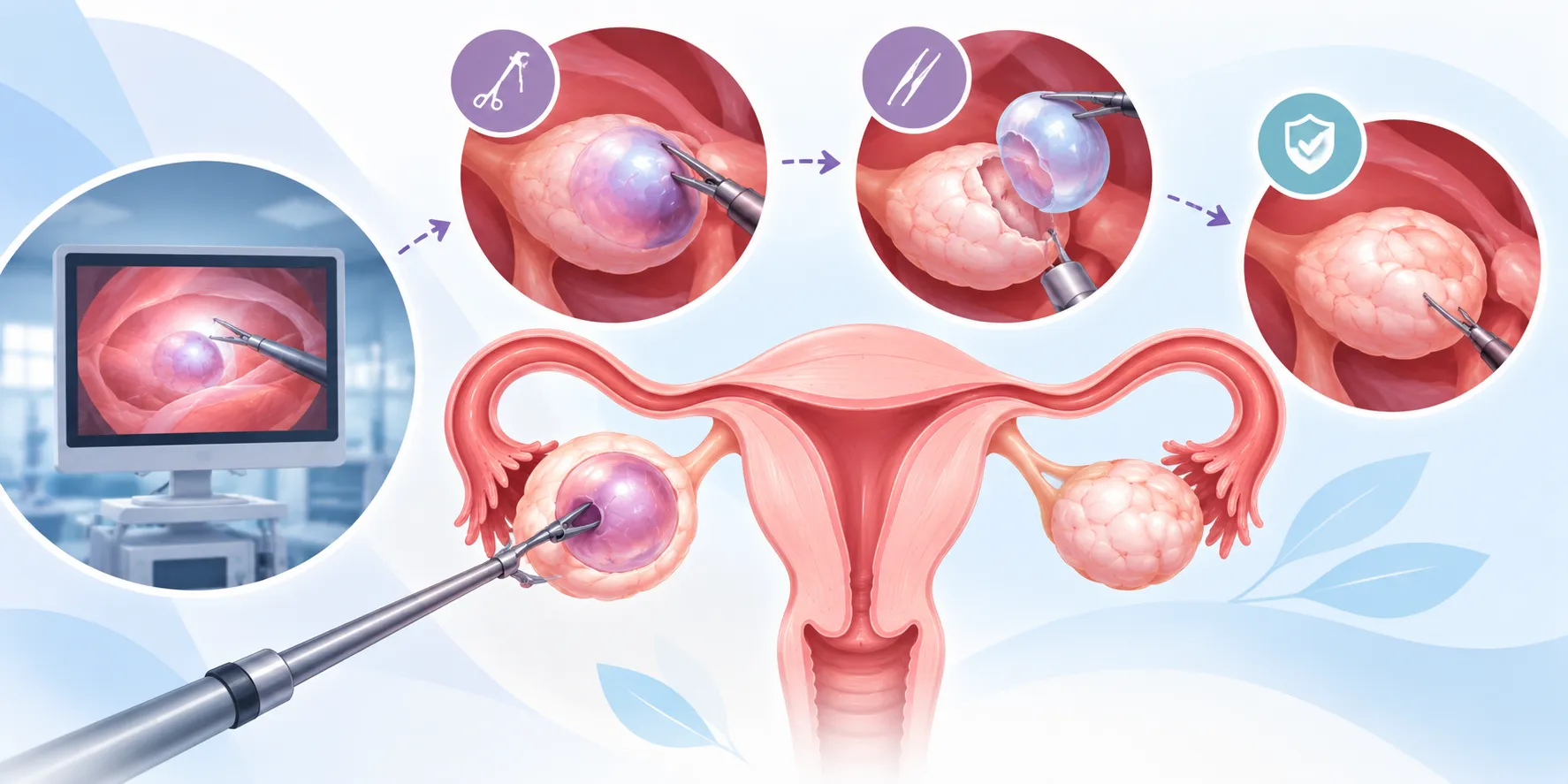
An ovarian cystectomy is an operation to remove a cyst (a fluid-filled or tissue-filled sac) from the ovary while leaving the rest of the ovary in place. It is usually done by laparoscopy (keyhole surgery), through small cuts in the abdomen. A larger cut (open surgery) is sometimes needed for very large cysts or when a cancer is suspected.

It is different from an oophorectomy, in which the whole ovary is removed. Doctors try to avoid removing an ovary in women who may want children, and the consent form should say what will happen if the ovary cannot be saved.
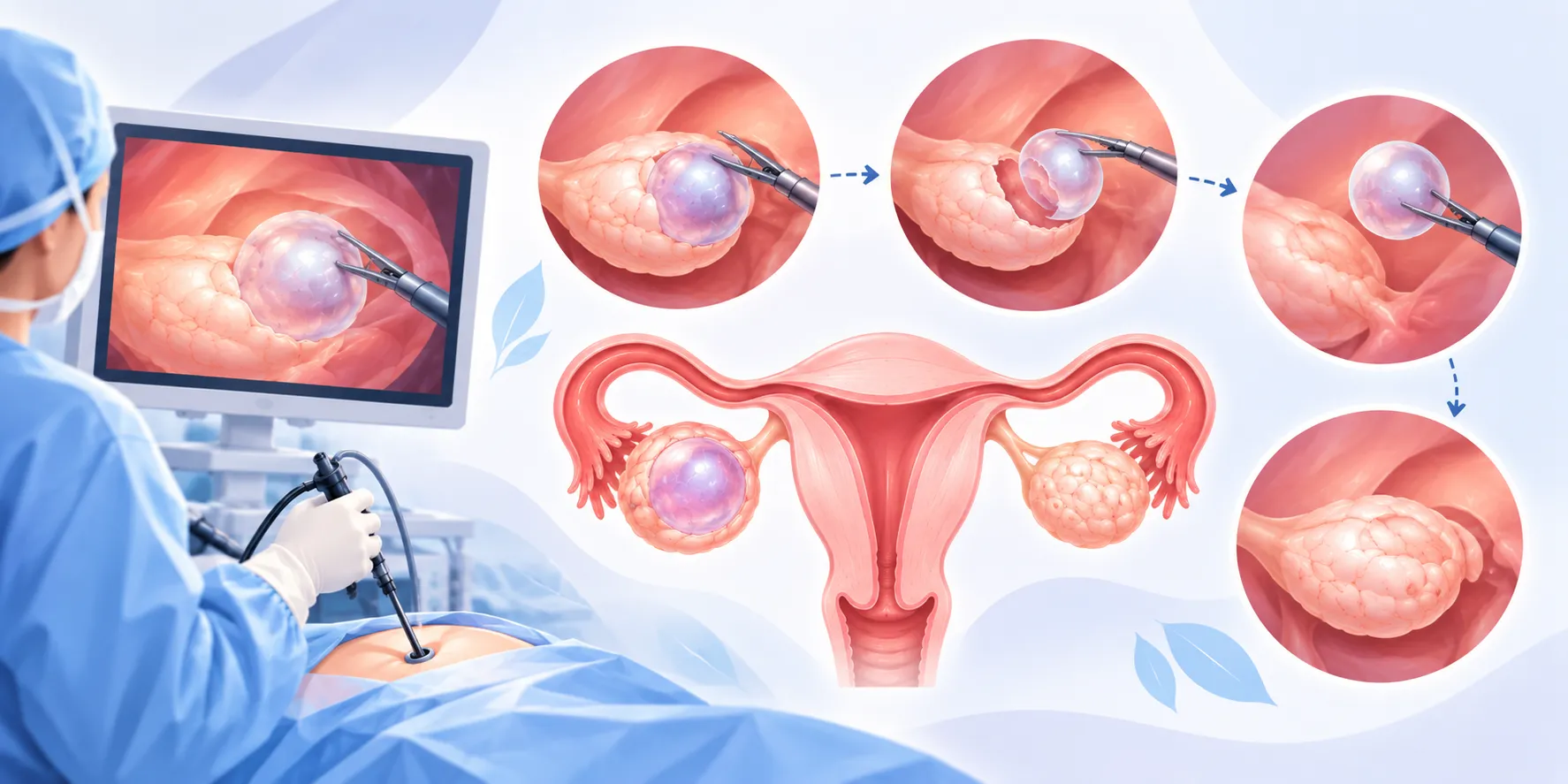
ovarian cyst.

The right decision depends first on what kind of cyst it is, because different cysts behave very differently.

Which Cysts Need Surgery?

The table shows common types of ovarian cyst and when surgery is usually considered:

Type of CystUsual BehaviourWhen Surgery Is Considered
Functional cyst (follicular or corpus luteum)Linked to ovulation; often shrinks on its own within a few cyclesRarely; if it persists, grows, or causes severe pain or bleeding
Endometrioma (“chocolate cyst”)Caused by endometriosis; does not go away by itself and can returnPain, rapid growth or large size, or unclear diagnosis; before IVF only in selected cases
Dermoid cyst (mature teratoma)Usually benign and slow-growing; can twist the ovarySymptoms, larger size, growth over time, or risk of twisting
Cystadenoma (serous or mucinous)Benign but can become very largePersistent, growing or symptomatic cysts
Cyst with suspicious features on scanSolid areas or unusual blood flow may raise concern for a tumourNeeds specialist assessment; may require a gynaecological oncologist
Twisted ovary (torsion) with a cystSudden severe pain; blood supply is cut offAn emergency; the ovary is untwisted and saved where possible

Polycystic ovaries (PCOS) are a different matter. The many small follicles seen on a scan are not cysts that need to be removed, and cystectomy is not a treatment for PCOS.

Cystectomy, Egg Reserve and Fertility

The outer layer of the ovary holds the eggs. When a cyst is peeled away, some healthy tissue can be removed or damaged with it. Studies measuring AMH, a blood marker of egg reserve, have found that levels fall after cystectomy, most clearly after removal of endometriomas and when both ovaries are operated on.

  • Endometriomas and IVF — ESHRE guidance advises against routinely operating on an endometrioma before IVF when there is no pain or other reason, because surgery may reduce egg reserve without improving pregnancy rates.
  • Test before you operate — an AMH blood test and an antral follicle count on ultrasound give a baseline for comparison and help in planning.
  • Technique matters — careful peeling of the cyst and gentle control of bleeding with stitches or a sealant is generally considered kinder to the ovary than heavy use of electrical cautery.
  • Egg freezing — for some women with large or both-sided endometriomas, or with already low reserve, freezing eggs before surgery may be worth discussing.
  • Recurrence — endometriomas can return after surgery. Hormonal treatment after surgery can reduce this in women who are not trying to conceive.
  • Dermoid and other benign cysts — these tend to cause less loss of reserve than endometriomas, but some effect is still possible.
  • Age and time — for women in their late thirties, time spent on surgery and recovery has to be weighed against moving straight to IVF.

What Happens Before, During and After?

  • Before — an ultrasound (sometimes an MRI) describes the cyst. Blood tests, including AMH and, where suspicious features are present, tumour markers, may be done. You will usually fast for several hours before surgery.
  • During — under general anaesthesia, small cuts are made and the cyst is separated from the ovary and removed, often inside a bag to avoid spillage. The ovary is repaired, and the tissue is sent for examination.
  • Straight after — many women go home the same day or the next morning.
  • Following days — cramping, bloating and shoulder-tip pain from the gas are common for a few days.
  • Return to routine — often within one to two weeks after keyhole surgery, and longer after open surgery.
  • Pathology report — ask for the result, which confirms exactly what type of cyst was removed.
  • Follow-up — a scan and AMH after a few months help check the ovary and plan any fertility treatment.

Seek medical help promptly if you have fever, severe or worsening abdominal pain, repeated vomiting, heavy bleeding, or redness or discharge from a wound.

Risks to Know About

  • Reduced egg reserve — the most important fertility-related risk, and greater after removal of endometriomas or when both ovaries are treated.
  • Rarely, loss of ovarian function — this is uncommon, but more likely if there is very little healthy tissue left.
  • Bleeding and infection — usually minor and treatable.
  • Injury to nearby organs — the bowel, bladder or blood vessels can occasionally be injured.
  • Adhesions — scar tissue can form after surgery on the ovary.
  • Cyst recurrence or incomplete removal — particularly with endometriomas.
  • Removal of the ovary — rarely, if the ovary cannot be saved or a cancer is found, the ovary may need to be removed.
  • Anaesthetic risks and conversion to open surgery — uncommon, but possible.

Safety Standards and Guidelines

Assess before operating. Guidelines from bodies such as ACOG and the RCOG advise careful ultrasound assessment of ovarian cysts and, where features look suspicious, referral to a specialist team before surgery.

Prefer cystectomy over drainage for endometriomas. Removing the cyst wall lowers the chance of the cyst returning compared with simply draining or burning it, although it may reduce reserve more, so the choice should be individual.

Protect the ovary. Ovarian-sparing technique and an experienced surgeon make a real difference, particularly for endometriosis.

Informed consent. You should be told the reasons, the risks, the alternatives, and what may be done if the surgeon finds something unexpected, and consent in writing beforehand.

Cystectomy, Drainage, Ablation and Oophorectomy: How Do They Differ?

These are sometimes all described loosely as “cyst surgery”, but they are different operations:

FeatureCystectomyDrainage (Aspiration)Ablation (Cautery / Laser)Oophorectomy
What it doesPeels out the cyst and its wall, keeping the ovaryEmpties the fluid with a needleDestroys the inner lining of the cyst with heat or laserRemoves the whole ovary
Chance of the cyst returningLowerHigh; the fluid often refillsHigher than cystectomy for endometriomasNone on that side
Effect on the ovarySome loss of healthy tissue is possibleLeast surgical trauma, but rarely a lasting solutionMay damage the ovary too if heat spreadsThe ovary and its eggs are lost
Typically used whenMost cysts that need surgery in women who want to keep the ovarySelected simple cysts; not usually for endometriomasSelected cases where reserve protection is the prioritySuspected cancer, damaged ovary, or completed childbearing

Questions to Ask Before Agreeing to Cyst Surgery

  • What type of cyst is it? — ask to see the scan and have the findings explained.
  • Does it need surgery now, or can it be watched? — and what would change that decision?
  • Will surgery affect my egg reserve? — and can AMH and a follicle count be done first?
  • Should I freeze eggs before surgery? — if I have low reserve or cysts on both sides.
  • Which technique will be used, and how will bleeding be controlled?
  • What if the surgeon cannot save the ovary, or finds something unexpected?
  • How often will the cyst come back, and how can that be reduced?
  • Who will operate, and how often do they do this procedure?
  • Will I get everything in writing? — including the consent form and the full cost.

Red Flags to Watch For

  • Surgery advised for every cyst seen on a scan — many functional cysts settle without treatment.
  • Endometrioma surgery “to improve IVF” in a woman with no pain — without discussing the risk to egg reserve.
  • No AMH or follicle count done before ovarian surgery.
  • Whole ovary removed when the cyst could have been removed alone — unless there is a clear medical reason.
  • “Guaranteed pregnancy” after removing a cyst — no honest doctor can promise this.
  • Herbal or “cyst dissolving” cures — there is no reliable evidence that they work.
  • No pathology report and no explanation of findings.
  • Pressure to decide or pay quickly — unless it is a genuine emergency such as a twisted ovary.

The StemRx Approach

  • Diagnosis First — we identify the type of cyst and check your egg reserve before any operation is discussed.
  • Treat Only What Needs Treating — we do not advise removing a cyst simply because it is there.
  • Protecting Egg Reserve — we weigh the benefit of surgery against its effect on your eggs, and discuss egg freezing where it makes sense.
  • Honest Counselling — we explain the risks, the chance of recurrence, and when going straight to IVF may be the better choice.
  • Coordinated Care — surgery, recovery timing and IUI or IVF are planned together so you do not lose time.

Frequently Asked Questions

Do all ovarian cysts need to be removed?

No. Many cysts, especially functional ones, settle on their own and are watched with a repeat scan. Surgery is considered for cysts that persist, grow, cause troublesome symptoms, look suspicious, or twist the ovary.

Will cystectomy affect my chances of pregnancy?

It can reduce egg reserve, especially after removal of endometriomas or when both ovaries are operated on. For many women, the remaining eggs are enough, but this should be discussed and measured before and after surgery.

Should I have an endometrioma removed before IVF?

Not routinely. If there is no pain and no other reason for surgery, guidelines generally advise against removing it before IVF, because surgery may reduce egg reserve without improving results. Your doctor will weigh your symptoms, the cyst size and your reserve.

Can a cyst come back after cystectomy?

Yes, particularly endometriomas. Hormonal treatment after surgery can lower the chance in women who are not trying to conceive.

What is the difference between cystectomy and oophorectomy?

In a cystectomy only the cyst is removed and the ovary stays. In an oophorectomy the whole ovary is removed. Doctors try to avoid oophorectomy in women who may want children.

Are dermoid cysts cancerous?

Almost always not. Dermoid cysts are usually benign, but they can grow and twist the ovary, which is why surgery is often advised for larger or symptomatic ones.

Can tablets make an ovarian cyst go away?

Hormonal pills do not usually make an existing functional cyst disappear faster. After endometrioma surgery, hormonal treatment may help reduce recurrence, but it prevents pregnancy while you take it.

When can I try for a baby after cystectomy?

This depends on the type of cyst, the surgery, and your reserve. Many women are advised to try or start treatment within a few months, since endometriomas can return. Follow your own doctor’s advice on timing.

Why does StemRx publish this information?

Because many women are advised to have cyst surgery without a clear explanation of the reasons, options or effect on their eggs. We believe informed patients make safer decisions, whether or not they choose to be treated with us.

References

  1. ESHRE — Endometriosis guideline (2022)
  2. Raffi F, Metwally M, Amer S — The impact of excision of ovarian endometrioma on ovarian reserve: a systematic review and meta-analysis. Journal of Clinical Endocrinology and Metabolism (2012)
  3. Hart RJ, et al. — Excisional surgery versus ablative surgery for ovarian endometriomata. Cochrane Database of Systematic Reviews (2008)
  4. ACOG Practice Bulletin No. 174 — Evaluation and management of adnexal masses (2016)
  5. RCOG Green-top Guideline No. 62 — Management of suspected ovarian masses in premenopausal women (2011)

Want an Honest Opinion on Your Ovarian Cyst?

Speak with the StemRx team for a proper evaluation and a straightforward discussion of whether you need surgery, how to protect your egg reserve, and how it fits with your plans for pregnancy.
Book Your Consultation

Logo

Dr. Mahajan Hospital & ITC, Near Shell Petrol Pump,

R-831, Thane Belapur Road, Rabale, 

Navi Mumbai - 400708

To Book an Appointment : 91+9152215415

Email us : info@stemrx.in

Quick Links

Home

About us

IVF & Art

Fertility

Blogs

Contact Us

Resources

Fertility & Reproductive Medicine

Regenerative Medicine

Minimally Invasive & General Surgery

Cosmetic & urogynecology

Services

Exosomes Therapy

Mitochondrial Therapy

PCOS

IVF & Art