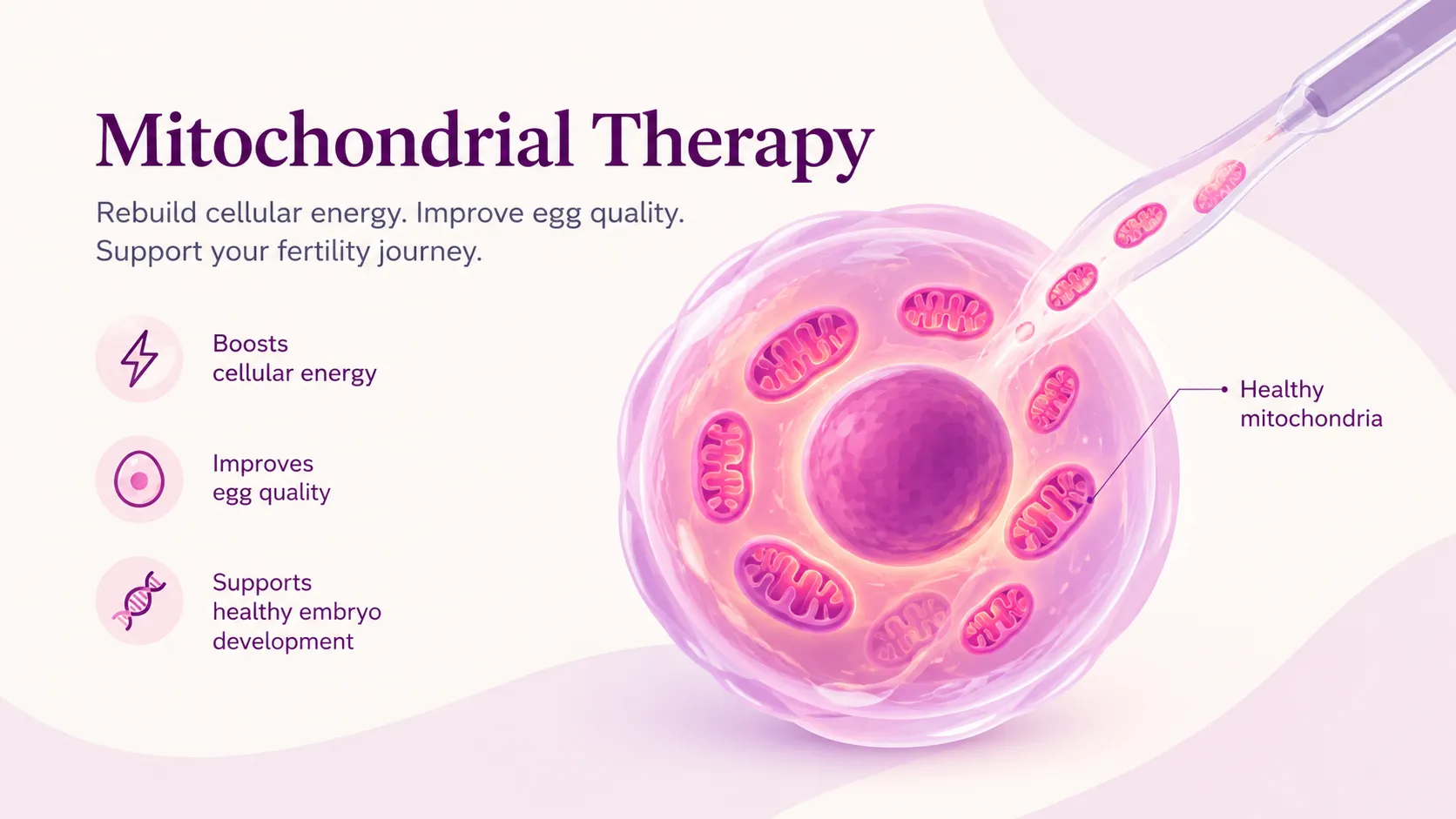
Supporting cellular energy and mitochondrial function to promote healthier reproductive cells and improve fertility potential.
Inherited from the mother
mitochondria, and their own small set of DNA, pass to a child through the egg
Tightly restricted
mitochondrial donation is allowed only under strict licensing in a few countries, such as the UK and Australia
Not proven for infertility
no mitochondrial procedure has been shown to reliably improve IVF success in ordinary infertility
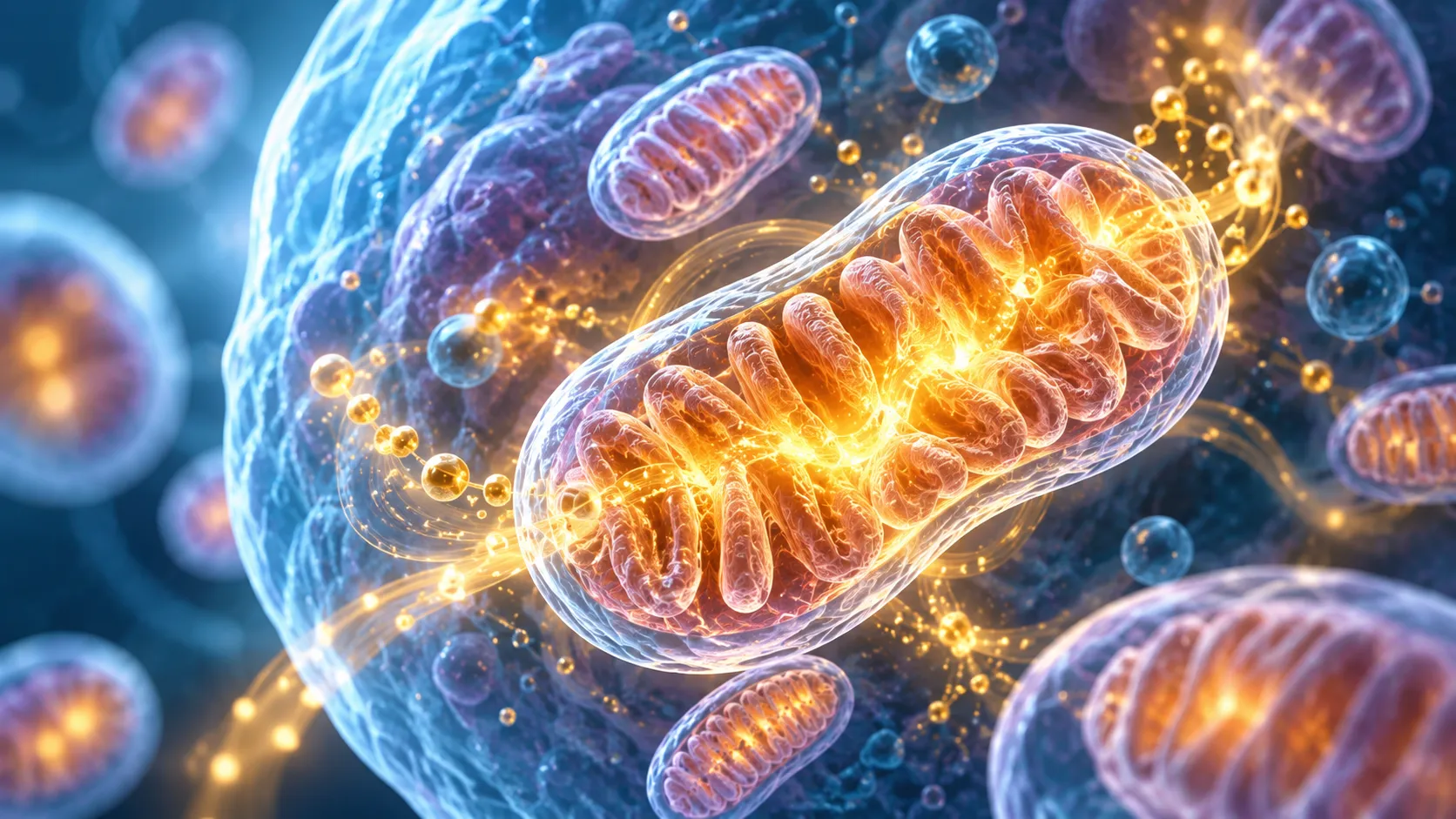
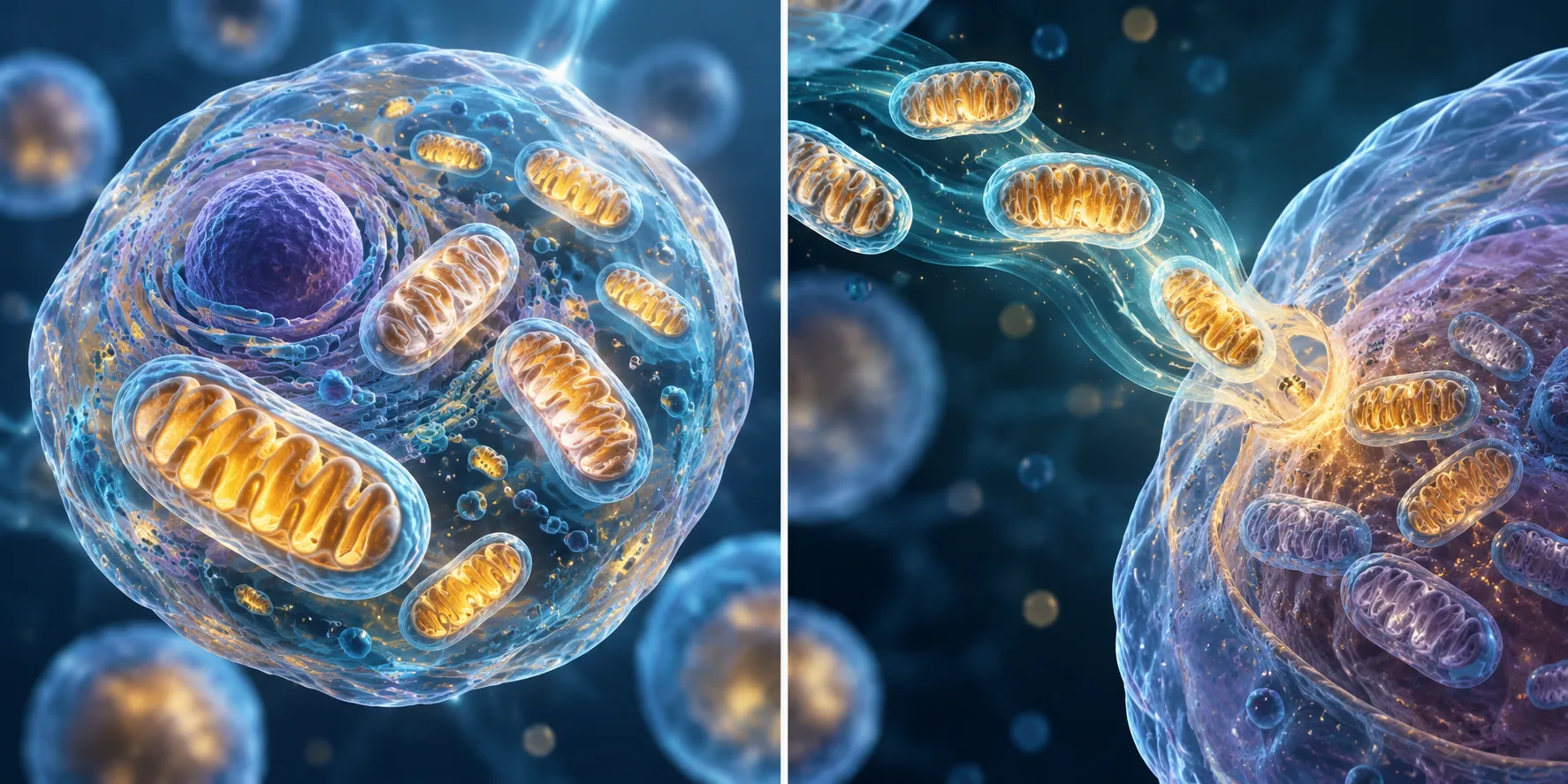
Mitochondria are tiny structures inside almost every cell. They turn food and oxygen into the energy cells need to work, grow and divide. An egg holds far more mitochondria than most cells, because it must power the earliest stages of an embryo before the embryo can make energy on its own.
“Mitochondrial therapy” is not one treatment. The term is used for several very different things, from a nutrient supplement to advanced laboratory procedures on eggs and embryos:
The science behind mitochondria is real and important. But an interesting idea is not the same as a proven treatment, and these four approaches sit at very different points on the evidence ladder.
The table shows the idea being tested and, importantly, how far the evidence has come:
| Area | The Idea Being Tested | Stage of Evidence |
|---|---|---|
| Mitochondrial donation (inherited mitochondrial disease) | Replacing faulty mitochondria so a serious disease is not passed to the child | Licensed, tightly regulated use in a few countries; small numbers of children, long-term follow-up still under way |
| Autologous mitochondrial transfer (egg quality) | Topping up an egg’s energy supply with the woman’s own mitochondria | Small trials have not shown a clear benefit; not a proven treatment |
| CoQ10 and other supplements | Supporting cell energy and reducing oxidative stress in egg and sperm cells | Some small studies suggest possible benefit; evidence is limited and of mixed quality |
| Embryo mitochondrial DNA testing | Using mitochondrial DNA levels to pick or reject embryos | Not validated; results are inconsistent and embryos may be discarded wrongly |
| Age-related and other conditions (brain, muscle, heart) | Boosting cell energy in tissues that lose function with age or disease | Mostly laboratory and early-phase studies; no proven treatment yet |
Mitochondrial procedures involve eggs and embryos, so the stakes are higher than for most treatments. Important open questions include:
The UK’s fertility regulator, the HFEA, allows mitochondrial donation only case by case, for patients at serious risk of passing on mitochondrial disease. Australia has also set up a licensed research pathway. Neither country treats it as a routine fertility option. In the United States, regulators are currently barred from reviewing applications to do the procedure, so it cannot be offered legally there.
In the United Kingdom and Australia, mitochondrial donation is allowed only through special legislation and licensing, for a narrow group of patients with serious inherited mitochondrial disease.
In the United States, a long-standing legislative restriction prevents the FDA from considering applications for embryos altered in this way, so the procedure is not available through approved channels.
In India, assisted reproduction is governed by the Assisted Reproductive Technology (Regulation) Act, 2021, and cell-based products fall under the New Drugs and Clinical Trials Rules, 2019, which require CDSCO approval. ICMR guidelines also do not permit modification of the human germline. We are not aware of any approved mitochondrial replacement or mitochondrial transfer service for routine fertility treatment in India.
Rules differ by country and continue to evolve, so it is always fair to ask any clinic to show you the approval that covers what it is offering.
These terms are often mixed up. They are different things with very different levels of evidence and risk:
| Feature | Mitochondrial Donation | Autologous Transfer | Supplements (e.g. CoQ10) |
|---|---|---|---|
| What it is | Moving the nucleus of an egg or embryo into a donor egg | Adding a woman’s own mitochondria to her egg | Tablets or capsules taken by mouth |
| Main purpose | Preventing serious inherited mitochondrial disease | Trying to improve egg or embryo quality | General support of cell energy |
| Involves editing an embryo? | Yes; child has DNA from three sources | Yes; procedure done on the egg | No |
| Regulatory position | Licensed only in a few countries; not an approved routine service in India | Experimental; approval or ethics-approved trial needed | Widely available as a supplement; not a treatment for infertility |
| Strength of evidence | Promising for its narrow purpose; long-term data still limited | Weak; no clear benefit shown in small trials | Limited and mixed; best discussed with your doctor |
Only in a very narrow way. A few countries license mitochondrial donation for families at risk of serious inherited mitochondrial disease. It is not an approved routine treatment for infertility, and we are not aware of any approved service for it in India.
There is no reliable proof that it can. Small trials of autologous mitochondrial transfer did not show a clear benefit. Established fertility care, such as evaluation, medication, IUI and IVF, remains the recommended path.
This is a popular name for a baby born after mitochondrial donation. Almost all of the baby’s DNA comes from the two parents. A very small amount, in the mitochondria, comes from the donor. The procedure is meant to prevent serious inherited disease, not to treat infertility.
Some small studies suggest a possible benefit, but the evidence is limited and the studies vary in quality. CoQ10 is a supplement, not a proven fertility treatment. Speak to your doctor before taking it, especially alongside other medicines.
Not yet. Studies have given inconsistent results, and it has not been shown that mitochondrial DNA levels reliably predict whether an embryo will lead to a healthy baby. Discarding an embryo on this basis alone is not recommended by professional bodies.
Safety depends on the exact procedure and where it is done. Because procedures on eggs and embryos can affect a child and later generations, they should only be done under approved, carefully supervised programmes with long-term follow-up.
Ask for the regulatory approval, the CTRI trial number and ethics committee approval, and how mitochondria are sourced and tested. If a clinic cannot or will not provide these, do not proceed.
Because patients are increasingly approached with “egg rejuvenation” offers, and trustworthy information is hard to find. We believe informed patients make safer decisions, whether or not they choose to be treated with us.
Get a proper diagnosis and discuss the proven options for your situation. If you are interested in newer approaches, ask your doctor about registered clinical trials, where treatment is supervised and monitored.
Speak with the StemRx team for a proper evaluation and a straightforward discussion of what is proven, what is promising and what to avoid.