Supporting endometrial health and regeneration to help create a more receptive environment for embryo implantation.
1 in 6
adults worldwide experience infertility in their lifetime (WHO)
About 7 mm
is the lining thickness many clinics use as a lower benchmark before embryo transfer
Investigational
intrauterine PRP is still being studied — we say this upfront
The endometrium is the inner lining of the uterus. Each cycle it thickens and becomes “receptive” for a short window so that an embryo can attach and grow. If the lining is too thin, scarred, inflamed or poorly supplied with blood, embryos may fail to implant even when they are of good quality.
“Endometrial rejuvenation” refers to procedures that aim to improve the condition of the lining. The most studied approach is an infusion of your own platelet-rich plasma (PRP) into the uterine cavity. PRP is a growth-factor-rich concentrate prepared from a small sample of your blood.
What it is not: endometrial rejuvenation is not a guaranteed fix for implantation failure. It cannot repair every cause, cannot make an abnormal embryo healthy, and cannot guarantee a pregnancy. Our doctors will explain this clearly before you decide.
According to the World Health Organization, about 1 in 6 adults experience infertility, and many couples need assisted reproduction to conceive.
A thin or non-receptive endometrium is a sign, not a diagnosis. Common causes include:
Many women have no symptoms at all, and the problem is found only when an IVF cycle does not work. That is why a careful uterine evaluation is so important.
Before any regenerative option, we look for causes that have a proven treatment:
| Test | Type | What It Shows | Limitation |
|---|---|---|---|
| Transvaginal Ultrasound (2D/3D, Doppler) | Imaging | Lining thickness and pattern, fibroids, polyps, uterine shape, blood flow | Thickness alone does not guarantee receptivity |
| Hysteroscopy | Minor procedure | Direct view of the cavity: adhesions, polyps, inflammation; treatment at the same time | Needs a short procedure, often with sedation |
| Endometrial Biopsy (chronic endometritis, TB tests) | Sample test | Hidden infection or inflammation, including tuberculosis | Mild cramping; results take a few days |
| Hormone Profile (oestradiol, TSH, prolactin, AMH) | Blood test | Hormonal reasons for poor lining growth | Timing within the cycle matters |
| Endometrial Receptivity Testing (selected cases) | Sample test | Attempts to identify the best day for transfer | Benefit is debated; used selectively |
Treating the cause always comes first. Regenerative options are added only when appropriate:
| Option | Best For | Evidence Level | Key Consideration |
|---|---|---|---|
| Hysteroscopic treatment (adhesions, polyps, septum) | Structural uterine problems | Established | Scar tissue can recur; follow-up is needed |
| Antibiotics for chronic endometritis / TB treatment | Proven infection or inflammation | Established | Needs confirmed diagnosis and specialist supervision |
| Optimised oestrogen protocol / frozen embryo transfer | Thin lining in stimulated cycles | Established practice | Lets the lining be prepared separately from stimulation |
| Add-on medicines (aspirin, sildenafil, pentoxifylline, G-CSF) | Selected thin-lining cases | Limited or mixed | Used case by case; benefits are not proven for everyone |
| Gestational surrogacy | Uterus that cannot carry a pregnancy | Established | Legal and personal factors apply; regulated in India |
| Intrauterine PRP infusion | Selected women with a thin lining or repeated implantation failure | Investigational | Encouraging but based on small trials; not guaranteed |
Intrauterine PRP has more supporting research than several other regenerative procedures. A 2022 meta-analysis pooling seven randomised trials (861 women with a thin endometrium or previous implantation failure) reported higher pregnancy rates with PRP, and concluded that it may be an effective therapy. Other systematic reviews describe the earlier findings as conflicting, especially for women with thin endometrium.
The trials were small and differed in how PRP was prepared, which women were included and when it was given, so the true size of any benefit is uncertain. The authors themselves call for larger randomised studies.
In plain words: it is a reasonable option for carefully selected women once other causes have been addressed, but it is still not a guaranteed treatment, and we will not promise it as one.
If, after evaluation and counselling, you and your doctor decide to go ahead, the pathway is:
Your specialist reviews your IVF history, embryo quality, previous scans and uterine procedures, and explains realistic outcomes, alternatives and costs.
Adhesions, polyps, infection or hormonal problems are treated first, because PRP is unlikely to help if these remain.
The infusion is timed with your embryo transfer cycle. You receive written information and give informed consent, including that the procedure is investigational.
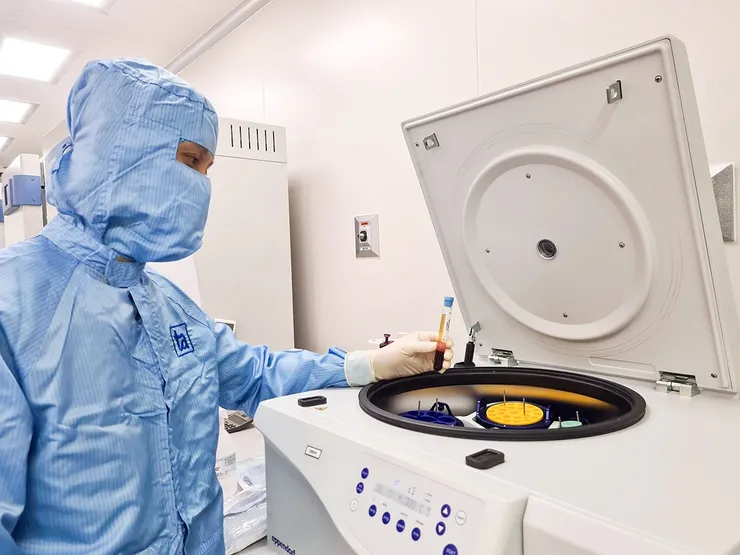
A small sample of your own blood is drawn and spun in a centrifuge to concentrate the platelets. Because it is your own blood, the risk of allergy or rejection is very low.
The PRP is placed into the uterine cavity through a thin, soft catheter, in a way similar to an IUI or embryo transfer. It usually takes a few minutes, needs no anaesthesia and is generally no more than mildly uncomfortable. Your protocol may involve one or two infusions.
Your lining is re-scanned, and if it is ready, the embryo transfer goes ahead as planned. If the lining is still not suitable, your doctor may postpone the transfer, keep the embryos frozen and adjust the plan.

Contact us promptly for fever, foul-smelling discharge, heavy bleeding or severe lower abdominal pain after the procedure.
“[Insert genuine, consented patient testimonial about counselling and care.]” — [Name, Age]
“[Insert a second genuine, consented patient testimonial.]” — [Name, Age]
Individual results vary. Testimonials reflect personal experiences and are not a guarantee of outcome.
Many clinics use about 7 mm around the time of transfer as a lower benchmark, but there is no single cut-off. Pregnancies have occurred with thinner linings, and thickness is only one part of receptivity, along with pattern and blood flow.
No. Some women show an increase in thickness, while others do not. Your doctor will scan your lining after the infusion and adjust the plan.
It is similar to an IUI or embryo transfer and takes only a few minutes. Most women feel mild cramping at most, and no anaesthesia is needed.
It varies with your protocol. Some women have one infusion, and others have two before transfer. Your doctor will explain the plan for your cycle.
Possibly in selected women, but repeated failure has many causes, including embryo chromosomes, immune and clotting factors, and uterine problems. We evaluate these before adding any procedure.
No. Scratching is a minor injury to the lining, and its benefit is not consistently supported by studies. PRP is an infusion of a concentrate from your own blood.
Using your own blood keeps allergy and rejection risk low, and serious complications appear to be uncommon in published studies. However, long-term safety data are limited, which is why counselling and informed consent are essential.
Speak with the StemRx fertility team for a complete uterine evaluation and an honest discussion of your options.